Lime Swallowtail

Lime or Chequered Swallowtail

Lime or Chequered Swallowtail

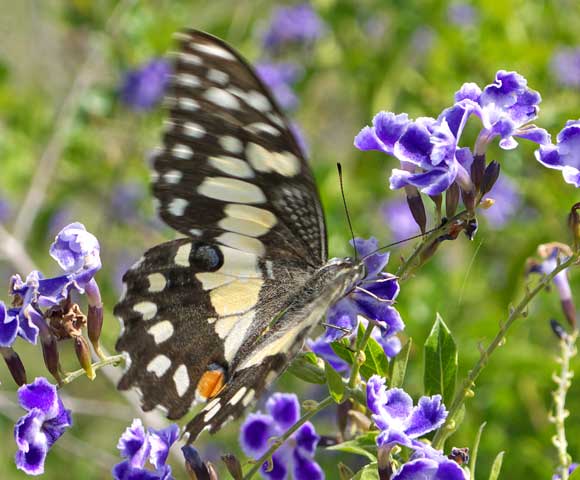
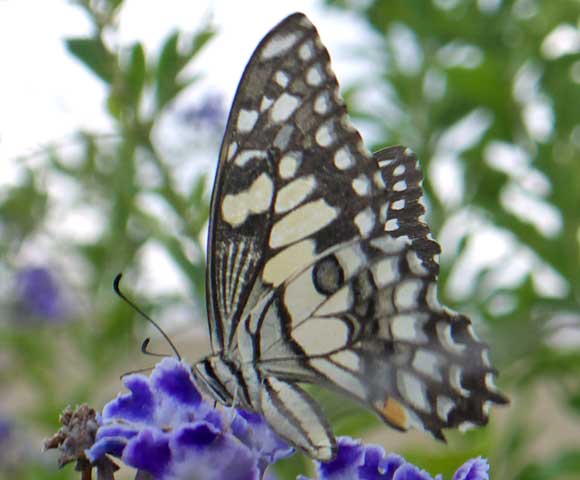
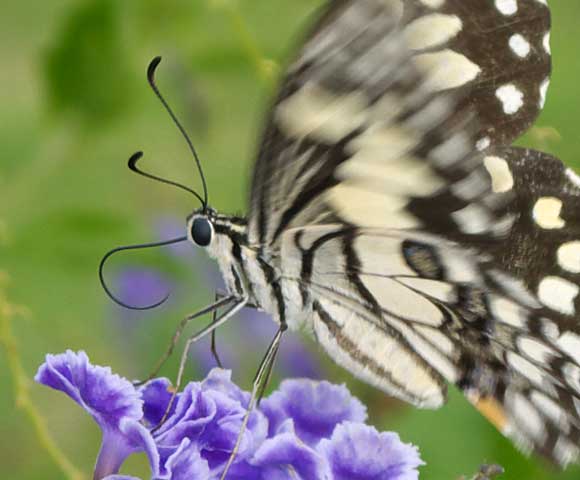
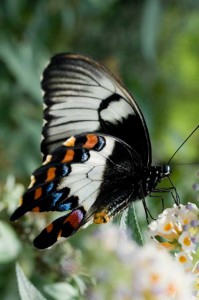
This Lime or Chequered Swallowtail (Papilio demoleus subsp. sthenelus) sighting was the first specimen we’d seen in this area. A very active butterfly it was loath to sit still long, and usually kept it’s top wings fluttering ready for a quick escape.

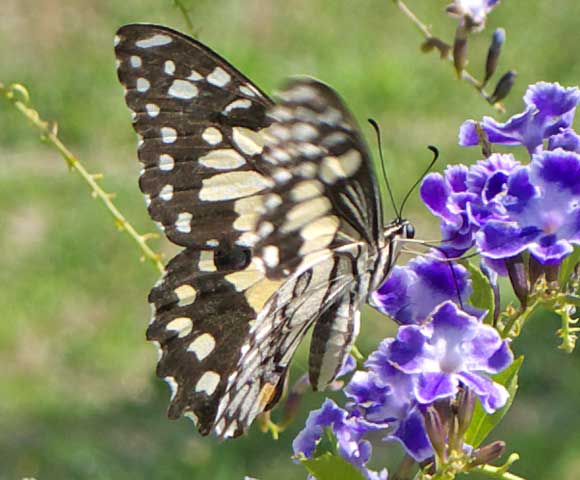
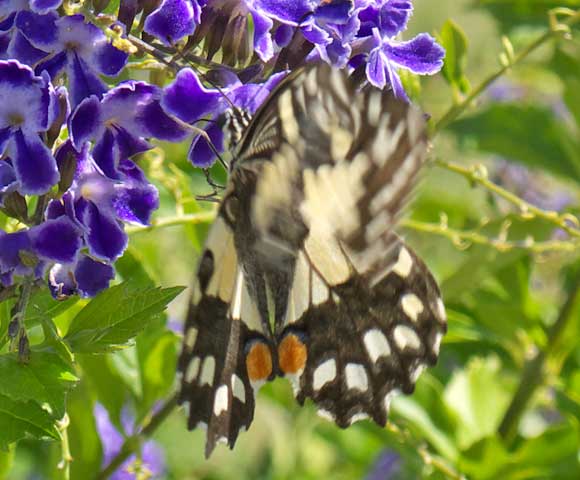
It has a very distinctively marked body, continuing the black wing stripes down the thorax and abdomen. The inside of the wings displays a dense chequered pattern across the shoulders, and two distinctive spots on the outer margin of each hind wing – an upper one blue, often hidden by the top wing, and the lower more obvious spot a rusty orange.

Since the 100mm+ rainfall last week there has been a sudden increase in butterfly numbers and activity. The Tailed Emperors are here this year in great numbers on the figs, and are frequently seen chasing each other in pairs.
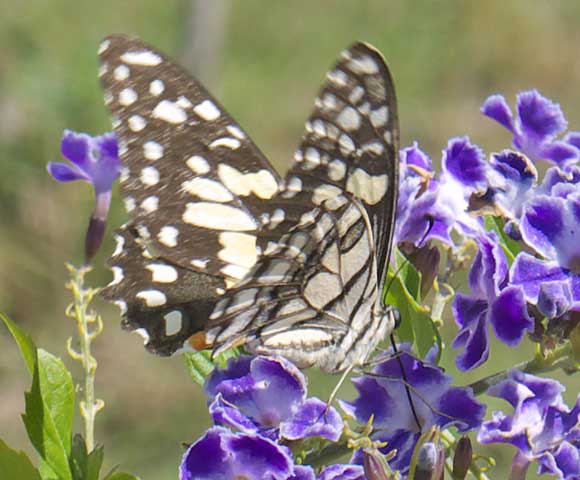
Lime or Chequered Swallowtail Butterfly

Lime or Chequered Swallowtail Butterfly

Feeding on Duranta repens Geisha Girl flowers

Feeding on Duranta repens Geisha Girl flowers

Distinctive blue and orange eye spots on the wings

Distinctive blue and orange spots on the wings


A chance sighting of this Lime Swallowtail was a delightful bonus. It was flitting between three of our Duranta repens ‘Geisha Girl’ bushes, feeding on the nectar alongside numerous Australian Blue Banded Bees.
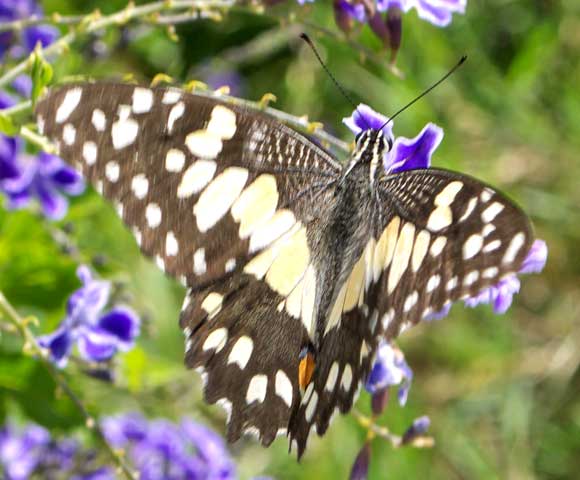
Chequered shoulder pattern on the wings.

Chequered shoulder pattern on the wings.

Lower orange eye spots and constantly moving upper wings.

Orange spots, constantly moving wings.

Lime or Chequered Swallowtail side profile.

Lime or Chequered Swallowtail side profile.


The numbers and variety of wildlife that are frequenting our small plantings are increasing each year. The Lime Swallowtail apparently uses various citrus as larvae food plants, so they have a lot of variety here to choose from now. This seems to be the common thread – provide food plants (nectar) for the butterflies, and larvae food plants for the butterflies to lay their eggs on, and they will come.

Further information on the Lime or Chequered Swallowtail can be found at http://lepidoptera.butterflyhouse.com.au/papi/demol.html
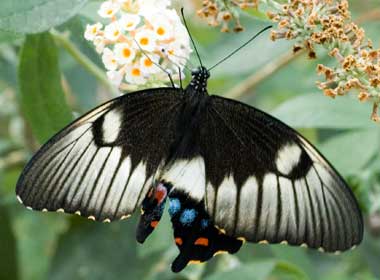
Citrus Swallowtail Butterfly

Female Citrus Swallowtail Butterfly

Female Citrus Swallowtail Butterfly

Citrus Swallowtail Butterfly

A quite large butterfly with a superficial resemblance to the Dingy Swallowtail, and sharing similar preferences for young citrus shoots to lay their much larger eggs. The Citrus Swallowtail is nowhere near as common as the Dingy Swallowtail. I have only seen 4, all females, in the past 2 years.

The Citrus Swallowtail is quite striking both for it’s markings and size. This individual had lost all of one hindwing, while the remaining hindwing was damaged. She was still quite a capable flier, just not as nimble as her undamaged “sisters”, who proved too restless and challenging so far to photograph.

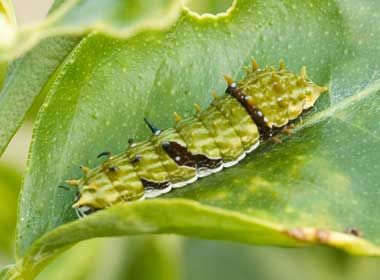
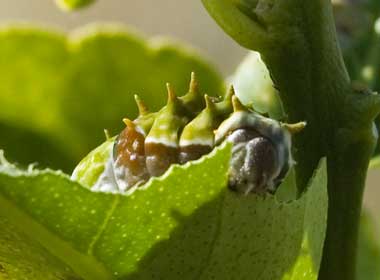
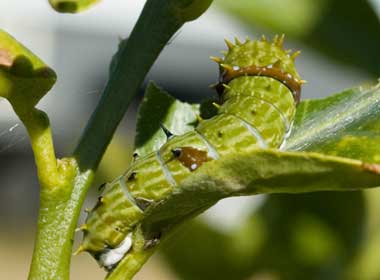
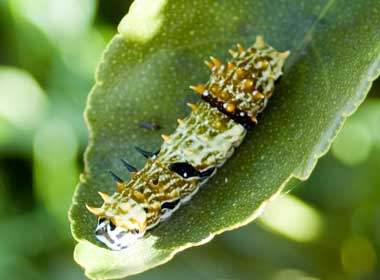
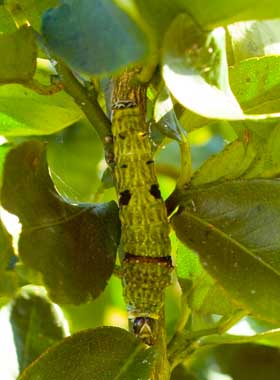
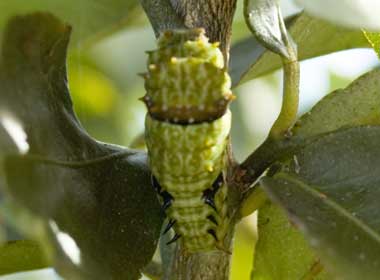
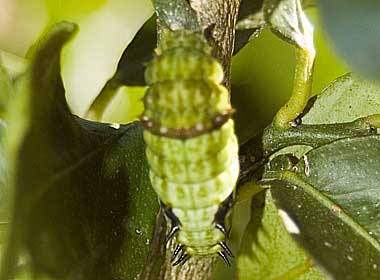
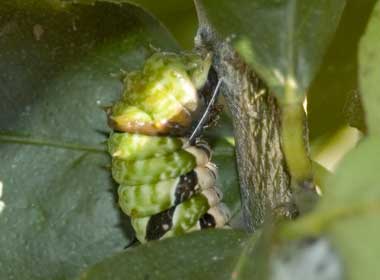
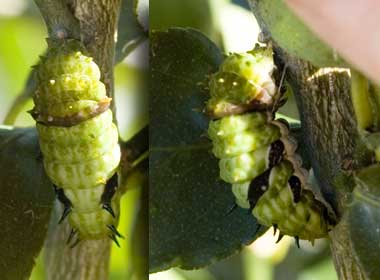
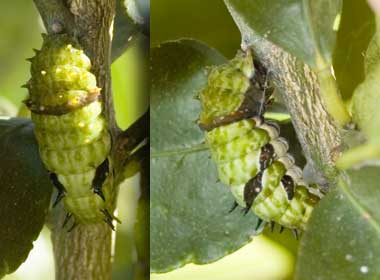
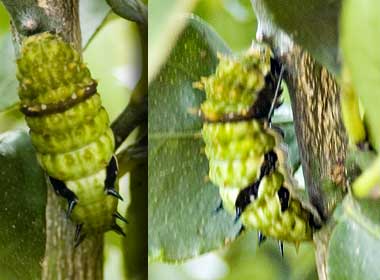
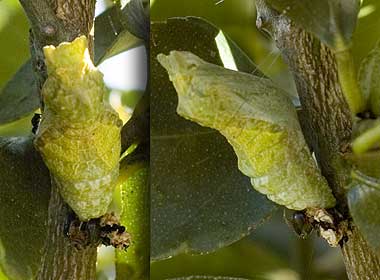
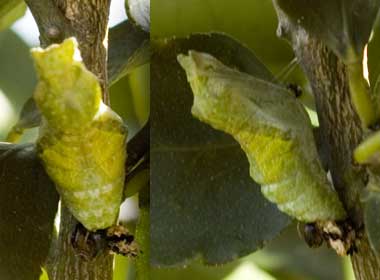
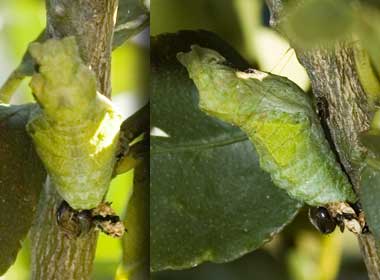
This past summer the Citrus Swallowtails have been frequent if elusive visitors to our citrus, especially the two Tahitian Limes. Numerous of their caterpillars have been observed through late summer and into autumn. One tree in particular is host to at least eight Citrus Swallowtail caterpillars. I have been checking them daily and taking photographs and have noticed two subtly different colourations. This may be simply individual variation. Unfortunately shortly before pupating all bar one individual managed to completely vanish – hopefully into the leafy inner branches to pupate safely away from predators.

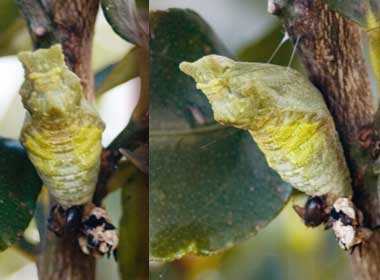
One pupating caterpillar however chose a spot not too difficult to get to with a camera, and the final few days to chrysalis stage were captured.


This record includes some of eight individual Citrus Swallowtail Caterpillars from one Tahitian Lime bush, and two from a second. These images were captured during the autumn and winter of 2011.

Citrus Swallowtail Caterpillar, 30th March 2011

30th March 2011

Citrus Swallowtail Caterpillar, 5th April, 2011

5th April, 2011

Citrus Swallowtail Caterpillar, 5th April, 2011

5th April, 2011

Citrus Swallowtail Caterpillar, 17th April, 2011

17th April, 2011

Citrus Swallowtail Caterpillar, 25th April, 2011

25th April, 2011

Citrus Swallowtail Caterpillar, 25th April, 2011

25th April, 2011

Citrus Swallowtail Caterpillar, 25th April, 2011

25th April, 2011

Citrus Swallowtail Caterpillar, 29th April, 2011

29th April, 2011

Citrus Swallowtail Caterpillar, 3rd May, 2011

3rd May, 2011

Citrus Swallowtail Caterpillar, 3rd May, 2011

3rd May, 2011

Citrus Swallowtail Caterpillar, 3rd May, 2011

3rd May, 2011

Citrus Swallowtail Caterpillar, 26th May, 2011

26th May, 2011

Citrus Swallowtail Caterpillar, 30th May, 2011

30th May, 2011

Citrus Swallowtail Caterpillar, 31st May, 2011

31st May, 2011

Citrus Swallowtail Caterpillar, 31st May, 2011

31st May, 2011

Citrus Swallowtail Caterpillar, 1st June, 2011

1st June, 2011

Citrus Swallowtail Caterpillar, 2nd June, 2011

2nd June, 2011

Citrus Swallowtail Caterpillar, 3rd June, 2011

3rd June, 2011

Citrus Swallowtail Chrysalis, 4th June, 2011

4th June, 2011

Citrus Swallowtail Chrysalis, 5th June, 2011

5th June, 2011

Citrus Swallowtail Chrysalis, 8th June, 2011

8th June, 2011

Citrus Swallowtail Chrysalis, 11th June, 2011

11th June, 2011

More to come …


Meadow Argus Butterfly

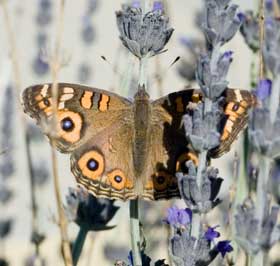
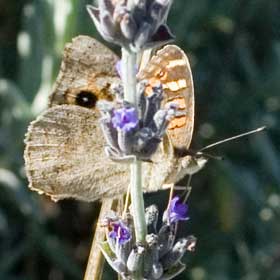
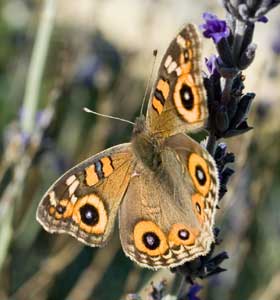
Another common brown butterfly of south eastern Australia. The Meadow Argus Butterfly is commonly seen in the company of the European Painted Lady butterfly.

More information on the Meadow Argus butterfly can be found on the Brisbane Insects web site.


Meadow Argus butterfly

Meadow Argus butterfly

Meadow Argus butterfly

Meadow Argus butterfly

European Painted Lady

The European Painted Lady is a very common butterfly during the warmer summer and autumn months. They gather in large numbers on ourĀ  Lavender bushes, frequent the Buddlieas and bask in the warm sun on the lawn, orchard grasses, dirt and gravel areas.

The photographs on the Lavender were taken early May, 2010, while the butterfly captured on the Buddliea was taken in March, 2011.

The European Painted Lady is a common garden butterfly throughout Albury, and up at least as far as Wagga to the north.


European Painted Lady on a Lavender bush.

European Painted Lady on a Lavender bush.

European Painted Lady on a Buddliea flower.

European Painted Lady on a Buddliea flower.

Caterpillars

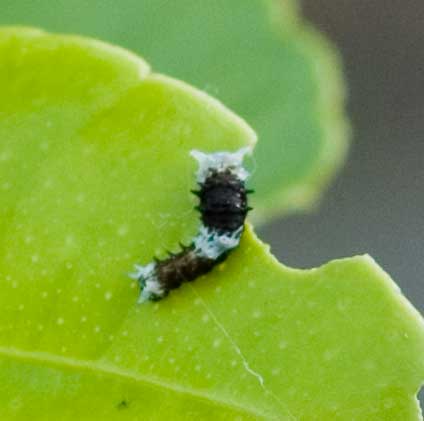
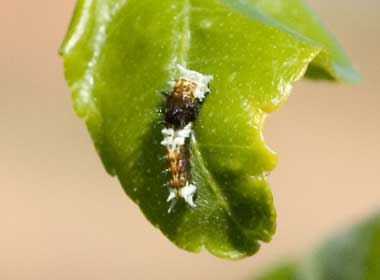
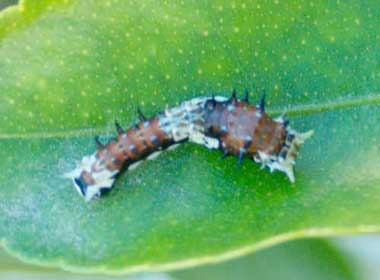
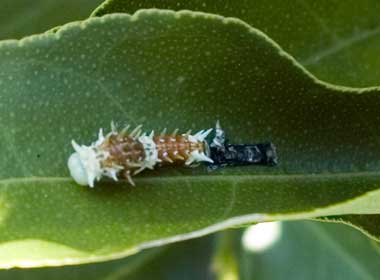
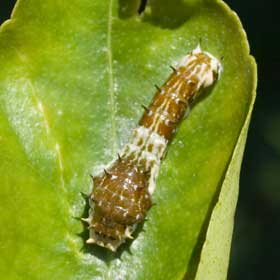
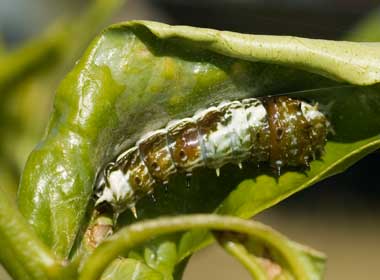
Checking the citrus for excessive butterfly eggs or caterpillars yesterday I found a couple of young Citrus Swallowtail caterpillars. They have an interesting life cycle as they grow so I’ll need to check back often. Then taking out the rubbish we managed to find a Tailed Emperor caterpillar too!

Citrus Swallowtail caterpillar

Citrus Swallowtail caterpillar feeding on a Tahitian lime tree

Tailed Emperor caterpillar

Tailed Emperor caterpillar feeding on Brachychiton acerifolius or Illawarra Flame Tree.